
Best Water Test Kits 2026: Our Top 4 Picks Reviewed
Your city's water report tells you what leaves the treatment plant—not what reaches your faucet. Lead from aging pipes, bacteria from plumbing, and contaminants from deteriorating infrastructure can all change what comes out of your tap. A water test kit is the only way to know for sure what you're drinking.
We spent three months evaluating 11 water test kits. We ordered each one, followed the instructions exactly, and sent lab samples from the same tap to verify consistency. Below are our four recommendations—and the seven kits we don't recommend.
Our Top 4 Picks
Tested & reviewed February 2026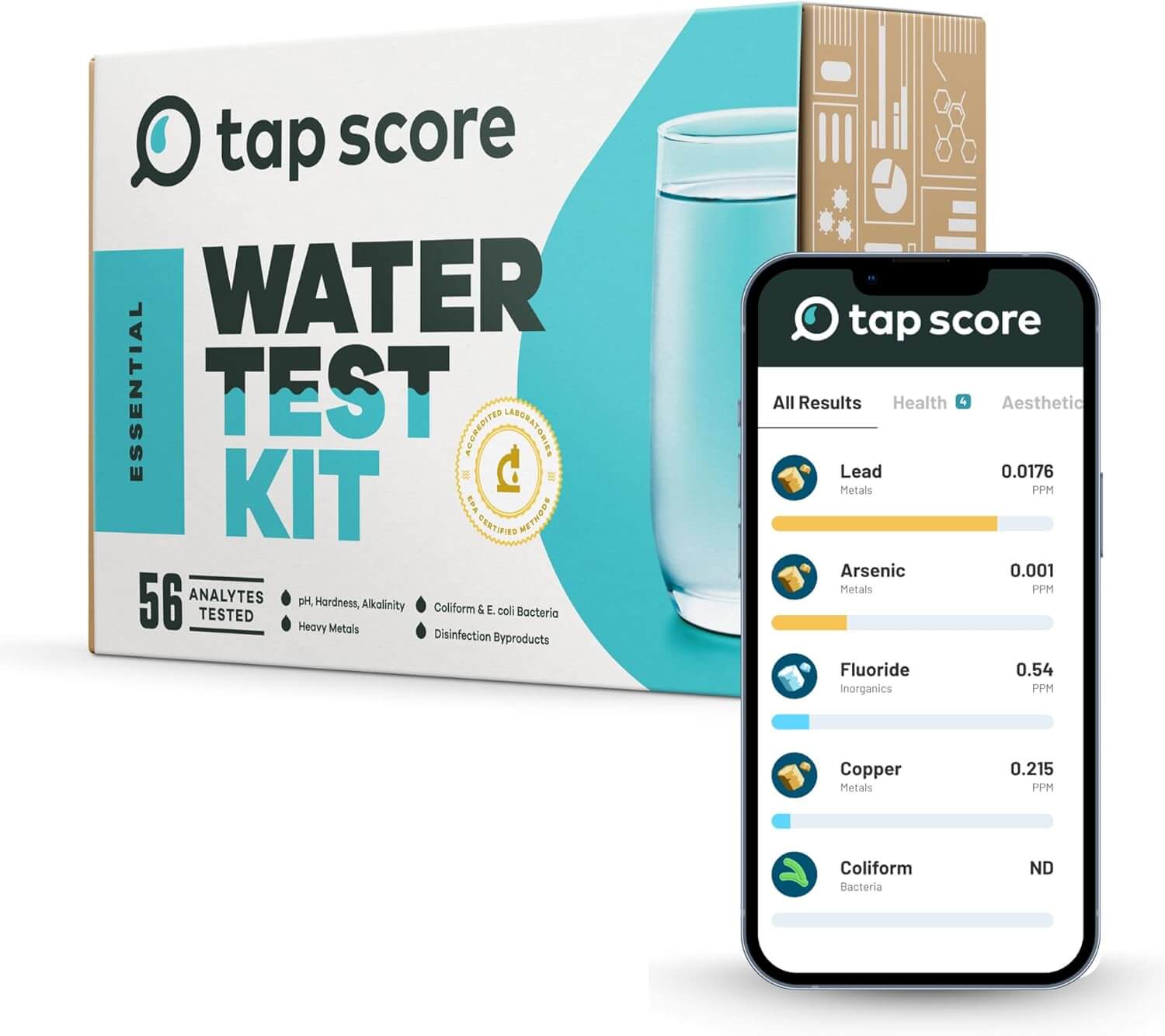
1. Tap Score Essential Water Test
by SimpleLab
52 contaminants · Lab results in 5-7 days
Tap Score is the kit we recommend to most people. It tests for 52 contaminants including lead, copper, PFAS, bacteria, nitrates, hardness, and disinfection byproducts—covering every major concern for city water users.
We sent samples from the same kitchen faucet to Tap Score and WaterCheck on the same day. Both detected the same contaminants, but Tap Score's report was dramatically better. Instead of a dense PDF with raw numbers, Tap Score provides an interactive online dashboard that color-codes each result as "Good," "Satisfactory," or "Attention Needed." For someone without a chemistry background, this makes a huge difference.
What we liked:
- • Best-in-class reporting. Clear explanations for each contaminant.
- • ISO 17025 certified labs. Gold standard for accuracy.
- • Prepaid shipping included. Drop-off takes 5 minutes.
- • Digital dashboard. Track changes over time.
- • Specialized add-ons. PFAS, pesticides available separately.
What we didn't like:
- • $199 is a lot. Overkill if you just want hardness.
- • 7-day turnaround. Not ideal if you're anxious.
- • Email-only support. No phone line.
Best for: Homeowners who want definitive answers. Especially if you live in a city with aging infrastructure like Chicago or Philadelphia, have a home built before 1986, or have infants/pregnant women at home.
The bottom line: If you're going to test your water once, make it count. Tap Score gives you the most useful, actionable results of any kit we tested.
Check price on Amazon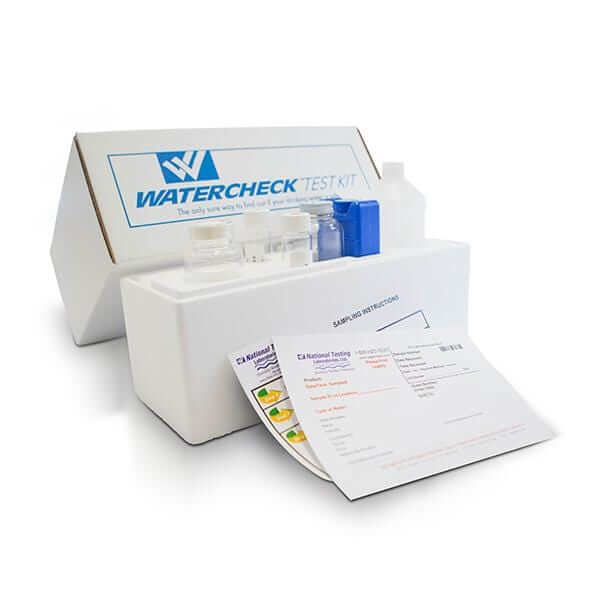
2. WaterCheck Deluxe
by National Testing Laboratories
83 contaminants · Lab results in 10-14 days
WaterCheck tests for 83 contaminants—31 more than Tap Score—at a lower price point. If you want maximum coverage per dollar, this is it. The Deluxe package includes everything in their Standard kit plus pesticides, herbicides, and PCBs, making it ideal for well water users or homes near agricultural areas.
National Testing Laboratories has been in business since 1990 and is one of the most experienced consumer water testing labs in the US.
What we liked:
- • 83 contaminants for $295. $3.55 per contaminant vs. Tap Score's $3.83.
- • Includes pesticides and VOCs. Coverage Tap Score doesn't offer.
- • Three tier options. Basic, Standard, and Deluxe.
- • 35+ years experience. ISO 17025 certified.
What we didn't like:
- • No prepaid shipping. You pay $8-15 and visit the post office.
- • 10-14 day turnaround. Nearly double Tap Score's speed.
- • PDF report only. Dense, limited plain-English explanation.
- • Dated website. Ordering feels like 2010.
Best for: Well water owners who need broad contaminant screening, homes near farms or industrial areas, and budget-conscious buyers who want lab accuracy.
The bottom line: WaterCheck gives you more tests for less money, but the experience is less polished. Excellent value if you can tolerate the slower turnaround.
Buy at NTL Labs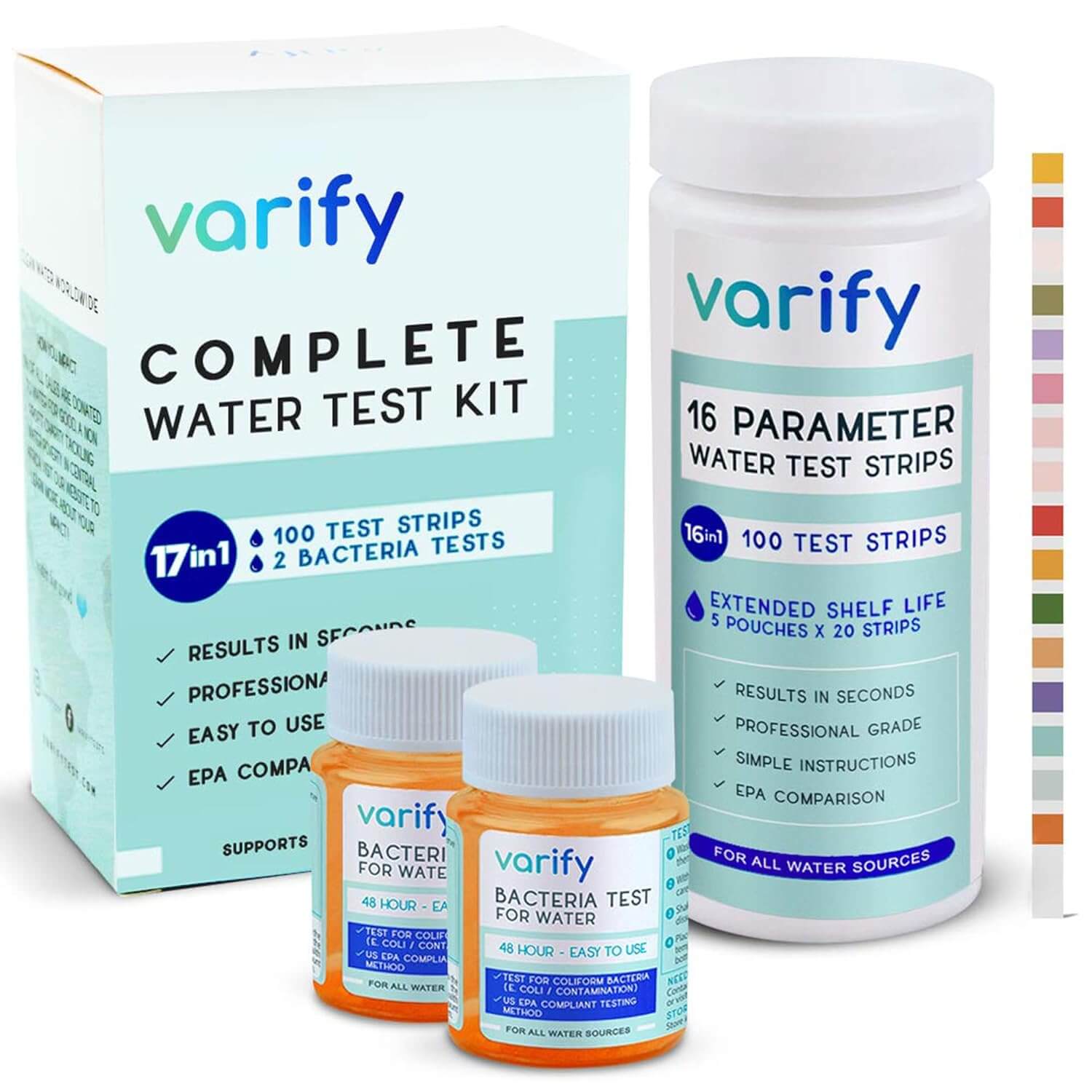
3. Varify 17-in-1 Complete Water Test Kit
by Varify
17 parameters · Results in 15 minutes
Varify is the best DIY kit for people who want quick answers without sending samples to a lab. You get 100 test strips that check for 16 parameters plus two separate bacteria tests. Dip, wait 60 seconds, compare colors. Done.
We tested Varify strips alongside our lab results. For basic parameters like hardness, pH, chlorine, and iron, Varify was consistently in the right range. For lead, however, the strips only show "detected" or "not detected"—they can't tell you if you're at 5 ppb (probably fine) or 50 ppb (definitely not fine).
What we liked:
- • 100 strips for $33. 33 cents per test. Test monthly for 8+ years.
- • Results in 60 seconds. No shipping, no waiting.
- • Bacteria tests included. Two separate vials (48-hour incubation).
- • Stable color results. Colors don't bleed or shift.
What we didn't like:
- • Color matching is subjective. Hard to read in low light.
- • Ranges, not exact numbers. Fine for screening, not documentation.
- • Can't detect trace levels. May miss lead at 8 ppb.
- • No PFAS, VOCs, or pesticides. These require lab equipment.
Best for: Regular screening between annual lab tests, renters who want a quick check, budget-conscious families, and anyone who wants fast peace of mind.
The bottom line: Varify won't replace a lab test, but it's the best way to screen your water for $33. Use it for routine monitoring.
Check price on Amazon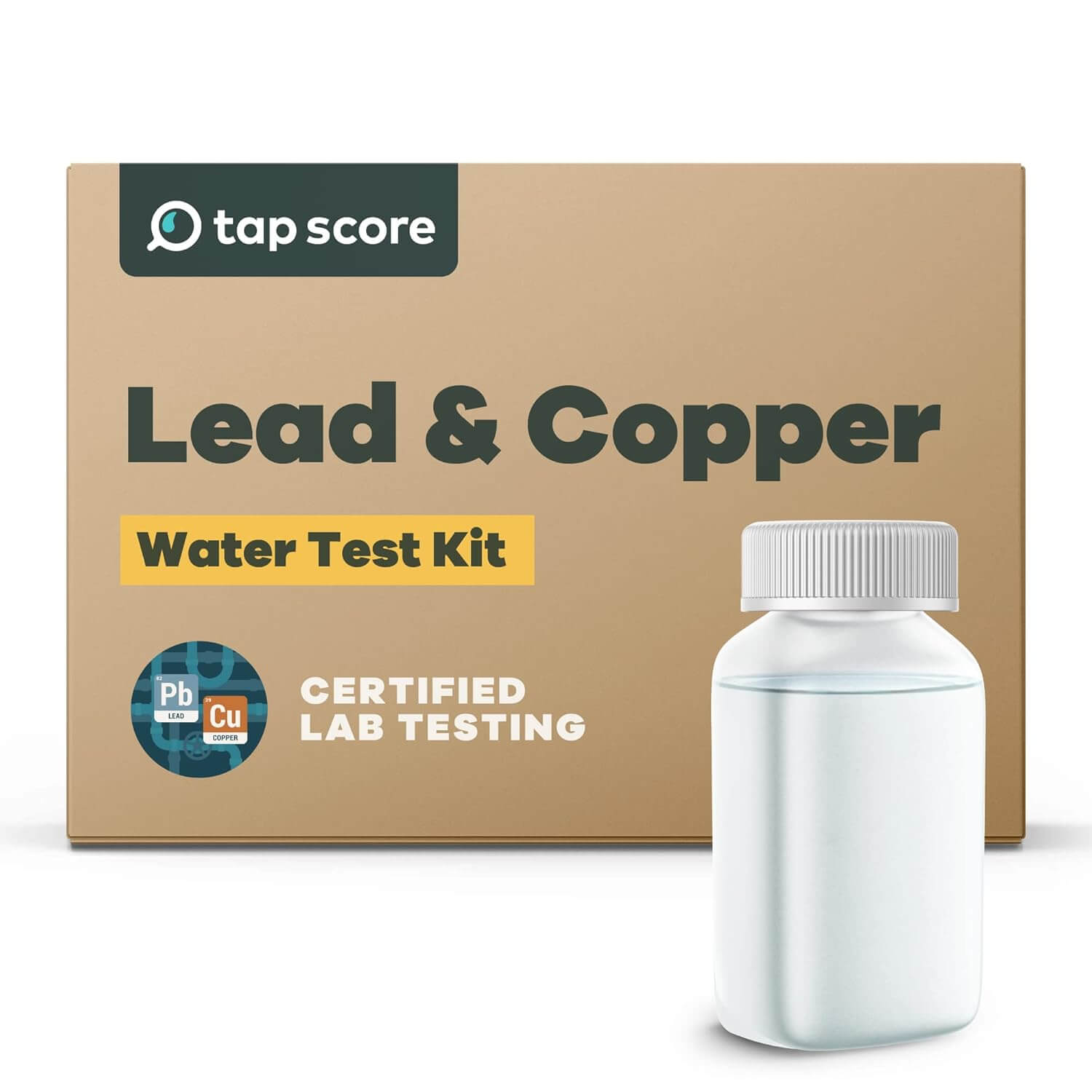
4. Tap Score Lead & Copper Test
by SimpleLab
2 contaminants (Lead + Copper) · Lab results in 3-5 days
If your primary concern is lead—and for many Americans in older homes, it should be—this focused test delivers lab-grade lead and copper results for just $59.
There is no safe level of lead exposure, especially for children. The EPA's "action level" is 15 ppb, but the American Academy of Pediatrics recommends below 1 ppb for school drinking water. A DIY strip can only tell you "detected" or "not detected." This lab test tells you exactly how much.
What we liked:
- • Precise measurements. Results in parts per billion (ppb).
- • Fast turnaround. We received results in 4 days.
- • $59 price point. Affordable for annual testing.
- • Same report quality. Interactive dashboard included.
What we didn't like:
- • Only tests for two things. Won't learn about bacteria, PFAS, etc.
- • Doesn't test for lead pipes. Tests water, not plumbing.
Best for: Homes built before 1986, families with young children, anyone in cities with known lead issues like Newark or Flint.
The bottom line: At $59 for a certified lab result, there's no reason not to test for lead if you have any risk factors. The peace of mind alone is worth it.
Check price on AmazonQuick Comparison
Side-by-side specs for our top 4 picks
| Tap Score Essential | WaterCheck Deluxe | Varify 17-in-1 | Tap Score Lead | |
|---|---|---|---|---|
| Category | Best Overall | Best Value | Best DIY | Best for Lead |
| Type | Lab test | Lab test | DIY strips | Lab test |
| Contaminants | 52 | 83 | 17 | 2 |
| Price | $199 | $295 | $33 | $59 |
| Turnaround | 5-7 days | 10-14 days | 15 minutes | 3-5 days |
| Lab Certified | ISO 17025 | ISO 17025 | EPA standards | ISO 17025 |
| Rating | ★★★★★ (4.8) | ★★★★☆ (4.5) | ★★★★☆ (4.6) | ★★★★★ (4.9) |
| Prepaid Shipping | ✓ Yes | ✗ No | N/A | ✓ Yes |
| Best For | Comprehensive peace of mind | Max contaminants per dollar | Quick screening | Older homes, families |
Lab Test vs. DIY Kit: Which Do You Need?
The most important decision for water testing
Lab Test ($59-199)
- •Buying or selling a home — Lab results serve as documentation
- •Private well — CDC recommends annual lab testing
- •Home built before 1986 — Lead pipes were common
- •Infants or pregnant women — No safe level of lead
- •Change in taste/smell/color — Needs professional analysis
DIY Kit ($15-30)
- •Quick results — 15 minutes vs. 5-14 days
- •Regular monitoring — Monthly screening
- •Tight budget — $33 beats $199
- •Already have lab baseline — Great for ongoing checks
- •Renting — Quick screening without commitment
Best Strategy: Use Both
Our recommended approach for most homeowners:
~$145/year after the initial test — less than $3/week for confirmed water safety
How to Collect a Water Sample
Bad sample collection is the #1 cause of inaccurate results
For Lab Tests (Tap Score, WaterCheck)
- 1. Choose your primary drinking tap. Usually the kitchen cold water faucet.
- 2. Don't run the water first. For lead testing, you want "first draw" water—the water that's been sitting in your pipes overnight.
- 3. Remove the aerator. Unscrew the small screen on your faucet tip.
- 4. Use the provided vials only. Lab vials are pre-treated to prevent contamination.
- 5. Fill to the line. Overfilling or underfilling affects accuracy.
- 6. Ship immediately. Most labs want samples within 24-48 hours.
For DIY Strips (Varify)
- 1. Fill a clean glass. Rinse with the water you're testing—not soap.
- 2. Dip the strip. Submerge for 1-2 seconds.
- 3. Wait the exact time. 60 seconds for Varify. Don't read early or late.
- 4. Read in natural light. Artificial lighting changes how colors appear.
- 5. Compare immediately. Match colors while still at peak development.
Common Mistakes That Ruin Results
| Mistake | Why It Matters | Fix |
|---|---|---|
| Running water before collecting | Flushes lead from pipes | Collect first-draw water |
| Using hot water | Hot water leaches more lead | Always test cold water |
| Dirty container | Soap affects pH readings | Rinse with test water only |
| Old DIY strips | Expired strips are unreliable | Check expiration date |
| Reading in dim light | Colors look different | Read near a window |
What Your Results Mean
How to interpret your lab test numbers
Lead
| Level | What It Means | Action |
|---|---|---|
| 0-1 ppb | Excellent. Below AAP recommendation | No action needed |
| 1-5 ppb | Low but detectable | Consider filter if you have young children |
| 5-15 ppb | Elevated. Below EPA action level | Install an NSF-certified lead filter |
| 15+ ppb | Exceeds EPA action level | Stop drinking, install RO filter, contact utility |
Bacteria (Total Coliform)
| Result | What It Means | Action |
|---|---|---|
| Not detected | Microbiologically safe | No action needed |
| Detected | Potential contamination pathway | Retest to confirm, then investigate |
| E. coli present | Fecal contamination confirmed | Stop drinking immediately. Boil water. |
Hardness
| Level | Classification | Impact |
|---|---|---|
| 0-60 ppm | Soft | Great for skin/hair. May be slightly corrosive. |
| 61-120 ppm | Moderate | Balanced. Most people prefer this range. |
| 121-180 ppm | Hard | Scale buildup begins. Consider softener. |
| 180+ ppm | Very hard | Significant scale, dry skin. Softener recommended. |
Cities like Phoenix (285 ppm) and Las Vegas (290 ppm) have very hard water. New York City (35 ppm) has soft water.
Kits We Tested But Don't Recommend
7 kits that didn't make the cut — and why
| Kit | Price | Why We Don't Recommend |
|---|---|---|
| Safe Home Basic | $12.99 | Only 8 parameters. No lead test. Too basic. |
| Health Metric | $24.99 | Only 9 parameters with poor color differentiation. |
| Watersafe | $29.99 | Single-use strips (only 6 tests). Poor value. |
| SJ Wave 16-in-1 | $15.99 | Colors bleed heavily. Inconsistent readings. |
| HoneForest TDS Meter | $8.54 | TDS meters don't measure contaminants. Misleading. |
| NTL Basic | $149 | Only 32 contaminants where Tap Score gives 52. |
| Safe Home Premium | $189 | 14-day turnaround with less useful report. |
A Note on TDS Meters
TDS (Total Dissolved Solids) meters are widely sold as "water quality testers" for under $10. They do not test water quality. A TDS meter measures electrical conductivity, which correlates with dissolved minerals—not safety. Perfectly safe mineral water will show high TDS. Dangerous lead-contaminated water might show low TDS. Do not rely on TDS meters for safety decisions.
What to Test For Based on Your Situation
Tailored recommendations for your water source
City Water (Municipal Supply)
Priority: Lead, disinfection byproducts, PFAS, hardness
Recommended: Tap Score Essential ($199) or Lead Test ($59)
How often: Annually, or after any plumbing work
Well Water (Private Well)
Priority: Bacteria, nitrates, lead, iron, arsenic, VOCs
Recommended: WaterCheck Deluxe ($295) + Varify ($33) for monitoring
How often: Lab test annually. DIY quarterly.
Older Home (Built Before 1986)
Priority: Lead, copper
Recommended: Tap Score Lead & Copper Test ($59)
How often: Annually. More frequently with children under 6.
Home Near Farmland
Priority: Nitrates, pesticides, herbicides, bacteria
Recommended: WaterCheck Deluxe ($295)—includes pesticide testing
How often: Annually
Concerned About PFAS
Priority: PFAS compounds (PFOA, PFOS, GenX)
Recommended: Tap Score PFAS Test ($249)—specialized test required
PFAS cannot be detected with DIY strips.
How Testing Connects to Your City's Water Quality
Our database tracks thousands of US cities
Our database tracks EPA violations, lead levels, and water hardness for thousands of US cities. Here's how testing fits in:
If your city has a clean record (like Seattle or Denver): Your home's plumbing can still contribute lead. A baseline lab test plus annual DIY monitoring is smart.
If your city has known issues (like Phoenix with hard water or Newark with lead): Testing is essential. City reports show system averages, not your specific tap.
If your city has recent violations: Order a comprehensive lab test immediately.
Frequently Asked Questions
How often should I test my water?
For municipal water, test once per year with a lab kit. For well water, the CDC recommends annual testing for bacteria and nitrates at minimum. Test more frequently if you have infants, are pregnant, notice changes in taste or appearance, or have done plumbing work recently.
Are DIY water test kits accurate?
For basic parameters like pH, hardness, and chlorine, good DIY kits (like Varify) are reasonably accurate. For critical contaminants like lead, they're limited to "detected/not detected" rather than precise measurements. Think of DIY kits as screening tools: use them for monitoring, lab tests for decisions.
Is my city's water report enough?
No. Your city's Consumer Confidence Report (CCR) shows water quality at the treatment plant—not at your tap. It doesn't capture lead from your home's pipes, bacteria from your plumbing, or water that's been sitting in pipes overnight. The CCR is a good starting point, but home testing is the only way to know what you're actually drinking.
Are TDS meters useful?
Not for safety testing. TDS meters measure electrical conductivity, which correlates with mineral content—not contamination. Clean mineral water shows high TDS. Dangerous lead water might show low TDS. TDS meters should never be used to assess water safety.
Can I test for PFAS at home?
No. PFAS require specialized laboratory equipment to detect. No DIY strip can identify PFAS. If you're concerned about PFAS, order Tap Score's PFAS panel ($249). The EPA set PFAS limits in 2024 at 4 parts per trillion—levels so low only certified labs can measure them.
How much does water testing cost?
DIY strip kits cost $15-30 and provide immediate results. Lab tests range from $59 (lead-specific) to $199+ (comprehensive). For most homeowners, a $199 annual lab test plus a $33 DIY kit for quarterly monitoring costs about $232/year total—roughly $4.50/week for confirmed water safety.
Our Testing Methodology
We evaluated 11 water test kits across five criteria: Accuracy (40%), Usability (25%), Coverage (15%), Value (10%), and Speed (10%). For lab tests, we sent samples from the same tap on the same day to compare results. For DIY kits, we compared strip readings against certified lab results.
We purchased every kit with our own money and have no financial relationship with any manufacturer beyond standard Amazon affiliate commissions. We recommend Tap Score as our #1 pick despite their lower affiliate commission because it genuinely produced the best results.
Sources: EPA Safe Drinking Water Act, CDC Private Well Guidelines, American Academy of Pediatrics Lead Recommendations
Last Updated: February 2026 · Prices shown as of January 2026 and may vary. Amazon affiliate links help support tapwater.org at no extra cost to you.